

Welding
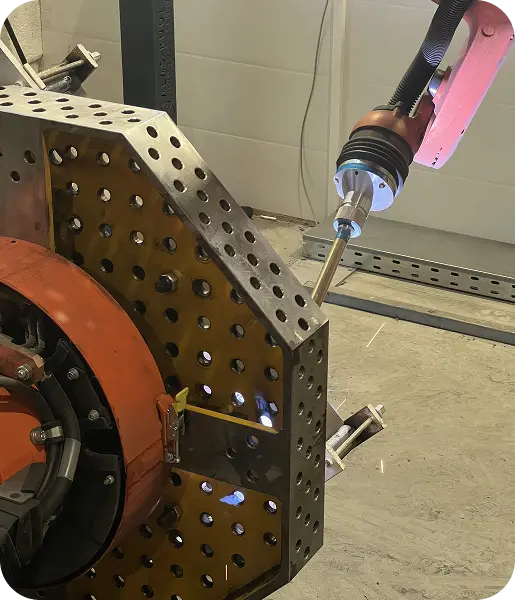
Welding robots represent a significant advancement in working with large industrial structures that require high-precision welding. When constructing masts or columns that serve as supports for concrete structures, metal components are inserted between these elements to ensure stability and strength.
Robotic welding offers significant advantages in this field. Here, metal parts must be welded to very strict standards to ensure both safety and durability. Robotic welding allows the work to be done quickly and accurately, ensuring high productivity and clean, high-quality welds.
This technology is particularly well-suited for large-scale production runs that require consistent quality and fast turnaround times. Bridges, other structures, and objects that must withstand heavy loads are ideally suited for robotic welding. Automation ensures high precision, consistent quality, and consistently repeatable results. This complies with industry standards and is essential for meeting industrial requirements.

Robotic welding is a step forward that allows work to be done with fewer people. This reduces the risk of errors and speeds up production, while maintaining the highest quality standards.